










Most leaders can identify some- one who saw potential in them before they recognized it themselves. Take a moment to think about that person and give thanks for their investment in your calling. Then consider a second question: For whom have you been that person?
At a recent gathering for our Wise Stewards Initiative cohort, we hosted a session on shoulder-tapping in which we talked about who helped us realize our call and the importance of this practice. Leaders invest deeply in forming students. Formation does not begin and end with those we educate. It should be woven into the fabric of our institutions. Just as we help students discern gifts, calling, and vocation, we can help colleagues recognize their own capacities that they may not yet see. Shoulder-tapping is not simply identifying future executive leaders; it is the practice of noticing gifts and potential.
Beyond the individual benefit of this practice lies the benefit to the field. If most leaders emerge from within our institutions (see The Census, p.13) leadership development cannot be someone else’s responsibility. Everyone has a role to play in cultivating the next generation. What do the data suggest to you about intentional leadership development to support emerging leaders and the need for those within your school to cultivate and shape future leaders? It says to me that organizations like the In Trust Center must invest in supporting such cultivation.
Let me offer one faithful next step: Share your wisdom. Informally, you can mentor individuals within your school, church, or community. Collectively, we can create resources and learning communities to support emerging leaders.
This past month, the field lost a champion. Anthony “Tony” Ruger, formerly of the Auburn Center for the Study of Theological Education, had a passion for investing in leaders in theological education. Tony developed leaders to grow in understanding their school’s financial models and the importance of economic equilibrium. He believed theological schools would be stronger through this investment. Tony’s passing is a reminder to share wisdom, teach others, and invest in the future of theological education.
That future will not be shaped solely by strategic plans, initiatives, or institutions but by people. The questions are simple: Who saw you first? And who do you see?
I’d love to hear about your shoulder-tapping story. Email me at akardash@intrust.org.
Summer blessings.
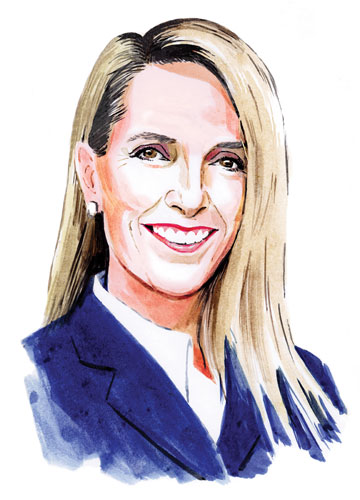
Amy L. Kardash, President