











Strengthening and Supporting Our Members
Efforts to maximize the potential of governing boards have taken on even greater urgency. Every day, leaders are faced with unprecedented challenges and fast-emerging opportunities, and presidents and board chairs seek help that is institutionally relevant, affordable, and specific to the strengths and expertise of their boards.
The In Trust Center’s Wise Stewards Initiative meets all three criteria and more.
The curriculum, resources, and format of the project are designed especially for leadership teams of theological schools by experienced educators, administrators, and consultants; all of whom have firsthand knowledge of graduate theological education. And with funding from the M. J. Murdock Charitable Trust, participation is within financial reach of every school.

Cohort-Based Learning
The Wise Stewards Initiative utilizes a cohort-based learning model that includes assessments, resources, faculty coach-led presentations, and peer learning opportunities with governance teams from other schools. Cohorts are comprised of up to 10 theological schools.
Objectives
- Creating space for innovation, leading change, and maximizing board potential.
- Reimagining governance as a force for change.
- The president/board partnership in support of institutional renewal.Clarifying roles and responsibilities of boards of theological schools.
- Clarifying roles and responsibilities of boards of theological schools.
Core Essentials for Good Governance
Developed in partnership with the Wise Stewards Initiative, we have identified six core essentials, which highlight the critical role of effective governance in promoting institutional well-being, specifically tailored to board leaders and presidents. Access the Core Essentials resources below to explore resources that support the six essentials.

Essential 1
Respect the Past & the Future
The board seeks to balance respect for the ways things have been with a robust anticipation of what’s to come.
Resources


Essential 2
Commitment to Board Development & Growth
The board takes responsibility for its preparedness to govern effectively.
Resources
Documents
Core Essential 2-Diversity in the Boardroom
Essential 2: Commitment to Board Development and Growth
Documents
Core Essential 2: Our Board at its best
Essential 2: Commitment to Board Development and Growth

Essential 3
Responsibility for Effective Institutional Leadership
The board takes responsibility for hiring, supporting, and evaluating the president.
Resources
Documents
Core Essential 3-President-Board Chair Partnership
Wise boards know the relationship between the school president and board chair is mission-critical.
Documents
Core Essential 3-Presidential Evaluation
Presidential evaluation is challenging but essential, and when done with care, it strengthens leadership, trust, and shared purpose.

Essential 4
Vigilance for Mission & Economic Vitality
The board actively strives to achieve mission fulfillment with economic vitality.
Resources
Documents
Core Essential 4-Balanced Budgets Fundraising Goals
Budget balancing is a challenging process that requires oversight.
Documents
Core Essential 4: The Board’s Role in Fundraising
Essential 4: Vigilance for mission and economic vitality

Essential 5
Commitment to Shared Governance
The board establishes structures of leadership that invite members of the campus community to contribute to the vitality of the institution.
Resources
Documents
4 Steps to Smooth Functioning Shared Governance
Core Essential 5: Commitment to Shared Governance

Essential 6
Implementation of Planning & Assessment
The board models an institutional culture of collaborative goal setting, continuous planning, and hard-nosed evaluation.
Resources
Documents
Core Essential 6: A short apologetic for Board Self-assessment
Essential 6: Implementation of planning and assessment at all levels
Documents
Core Essential 6: AI, Smarter Questions, and Wise Stewardship
Essential 6: The board models the importance of goal setting, continuous planning, and hard-nosed evaluation
Faculty Coaches
The Faculty Coaches design the curriculum and work hand in hand with participating schools. Each faculty member serves as a governance coach for at least two participating schools and teaches during a two-day seminar.

Rebekah Burch Basinger
Program Director
A regular contributor to In Trust magazine, Rebekah has written numerous articles on fundraising and board life. In addition, she is the coauthor with Thomas Jeavons of Growing Givers’ Hearts: Treating Fundraising as Ministry (Jossey-Bass, 2001) and is the lead author of “The President’s Role in Institutional Advancement” in the ATS Handbook for Seminary Presidents.
Rebekah received a B.A. in English from Trinity College in Illinois, an M.A. in English from Wichita State University, and a doctorate in educational leadership and policy studies from Temple University. She blogs at www.generousmatters.com.

Lynette M. Brown-Sow
Faculty Coach
Through her firm, she ensures clients achieve their desired goals for growth and sustainability by way of services which include but are not limited to: governance, organizational development, strategic positioning, and branding. Brown-Sow has nurtured the development and wellness of communities by dedicating her personal and professional life to improving the non-profits, businesses and governments that serve them. She currently sits on numerous local, national and international boards, working alongside the best and brightest to drive innovation and social impact across diverse sectors and industries.
Brown-Sow holds a BS in Administration from Antioch University; a M.S.S. in Policy, Planning and Development from Bryn Mawr College; a Governing for Non-Profit Excellence certificate from Harvard University Graduate School of Business; and a Strategic Perspectives in Non-Profit Management certificate from Harvard’s Graduate School of Administration.

Doris García Rivera
Faculty Coach
A strong believer in justice-based education and collective sustainability, García Rivera is passionate about a teaching-learning process that empowers spiritual and human-dignifying experiences. As a result, she has served educational, church-related, and nonprofit organizations for over two decades. As Interim Director of the Baptist Peace Fellowship of North America (BPFNA-Bautistas por la Paz) (2019-2022), she managed to navigate the Covid 19 pandemic, redefining goals and programs while engaging donors to support BPFNA’s mission. García Rivera became the first Hispanic woman President of the Evangelical Seminary of Puerto Rico (2014-2019), overseeing the reopening, renewal, rebuilding, and restoration of the school after the devastation of Hurricanes Irma and María in September 2017. García Rivera was instrumental in developing the physical and technological infrastructure to modernize the operations and educational offerings of the school.
García Rivera’s focus on intercultural education and human rights as a Missionary of International Ministries of American Baptist Churches (IM-ABC) (1990-2013) resulted in the development of educational, theological, and social programs centering and dignifying the history and cultures of indigenous communities in Mexico and Afro-Costa Ricans. In collaboration with missionaries, nonprofits and churches in the U.S. and Puerto Rico, she developed the Seminario Intercultural Mayense (SIM) with theological programs (certificates and a college degree), youth and adult learning programs, and a women’s cooperative project, Skinal Nichimetik.
García Rivera is a frequent conference speaker, teacher, and workshop leader throughout the United States, Puerto Rico, and Central America collaborating with myriad journals and digital spaces. She is a board member of In Trust Center (2020-2026).
García Rivera is an ordained Baptist minister of the ABC – Puerto Rican Baptist Churches. Her interests are in Interculturality, Ancient Near Eastern culture, Prophetic speech analysis, and literature. She enjoys science fiction, writing, and listening to music. She is a proud white Afro-descendant Puerto Rican woman and mother of three adult children.

Kathryn Glover
Faculty Coach
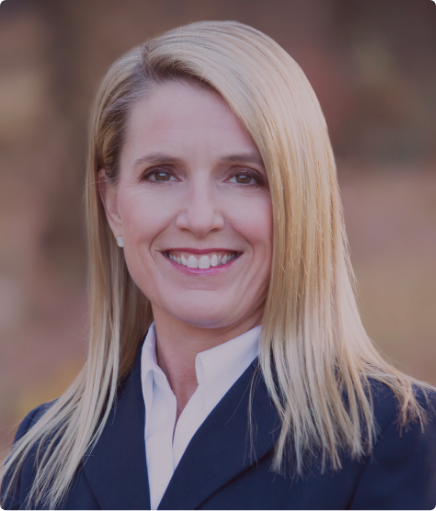
Amy L. Kardash
President
Kardash created the In Trust Center’s popular webinar series, which has served 190 seminaries, theological colleges, and related organizations in the United States and Canada. In 2012 and 2013, she helped to launch the In Trust Center’s Resource Consulting program and was named its first director. Since then, she and her team have consulted with more than 120 institutions and helped them identify the resources they need to thrive.
Before joining the In Trust Center, Amy Kardash enjoyed a 10-year career in corporate banking and marketing at PNC Bank and Wilmington Trust Company, where she held multiple management and executive positions overseeing diverse staffs from ten to more than a hundred employees.
Kardash holds both a bachelor of science in marketing and management and an M.B.A. from the University of Delaware.

Byron Klaus
Faculty Coach
Klaus presently serves as Vice President of ChildHope, a child development ministry engaging more than 100,000 children at risk in the Caribbean and Latin America. He also serves as a consultant for educational and ministry leaders globally. His articles and books have been published by Baker Books, Crossway Books, Logion Press, Moody Press, Regal Books, Regnum Books and Routledge Publishers. He is an ordained Assemblies of God minister.

David Rowe
Faculty Coach
Over the course of more than 30 years, Rowe has held presidencies at three independent institutions at the K-12, college, and graduate levels and served as university trustee and as vice president for advancement. Rowe guided Lancaster Theological Seminary as interim president through its first full year of online instruction and remote work while finalizing a definitive agreement for a merger with Moravian University.
An ordained United Methodist elder, Rowe earned a BS in Chemistry from Southwestern University in Georgetown, Texas, an MDiv from Emory University, and a PhD in Educational Policy Studies from Georgia State University. He holds certificates in Ecumenical Studies from the University of Geneva, in Experience Economy from Strategic Horizons, LLP, and in Disruptive Strategy from Harvard Business School Online.
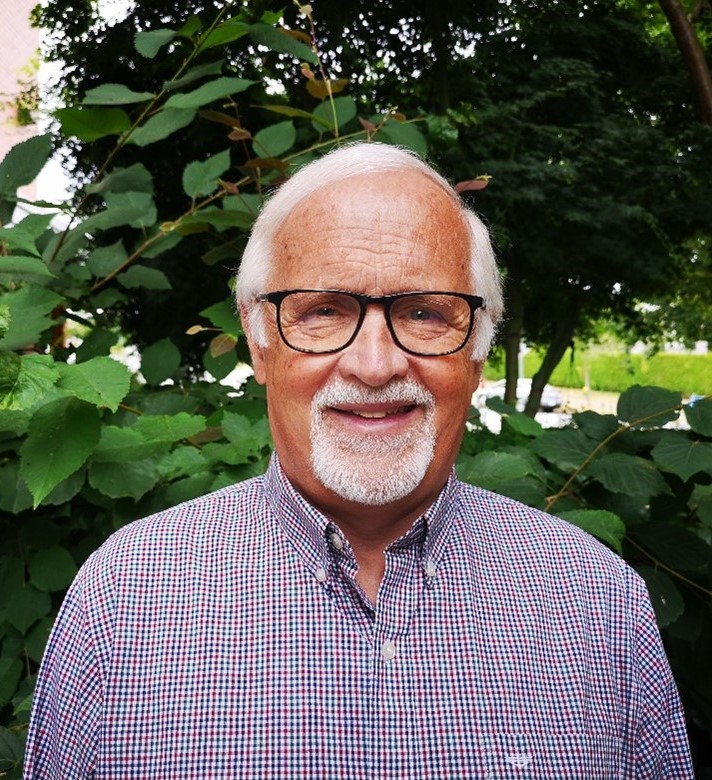
Rod Wilson
Faculty Coach

Mark Young
Faculty Coach
Young holds a Ph.D. in Educational Studies from Trinity Evangelical Divinity School and a Th.M. in New Testament Literature and Exegesis from Dallas Theological Seminary. He has served as the president of the board of directors for the Association of Theological Schools and is a member of the board of the National Association of Evangelicals and the International Council for Evangelical Theological Education.
Young has authored several publications, including The Hope of the Gospel: Theological Education and the Next Evangelicalism (Eerdmans Publishing Company, 2022), One True Story, One True God: What the Bible Is All About (Our Daily Bread Publishing, 2021), “Marriage and the Mission of God,” published in Marriage: Its Foundation, Theology and Mission in a Changing World (Moody Press, 2018), and “Recapturing Evangelical Identity and Mission” published in Still Evangelical? Insiders Reconsider Political, Social, and Theological Meaning (InterVarsity Press, 2018). He has also presented on issues in theological education and mission for numerous international symposia and conferences.
Previous Participants in the Initiative



































Frequently Asked Questions
The purpose of the Wise Stewards Initiative is to encourage boards of theological schools to take a bold step beyond the usual approaches to governance — fiduciary responsibility, policy-oriented governance, and “governance as leadership” — through an exploration of governance as a change agent and engine for innovation. As part of their participation in the Wise Stewards Initiative, institutional teams identify strategic next steps and benchmarks in support of the board’s participation in creating a sustainable future for their school.
Up to 30 theological schools can participate in the Initiative — 10 in each year of the three-year project. Priority in the selection process is given to schools located in the five-state region of Alaska, Idaho, Montana, Oregon, and Washington. Schools are selected on a rolling basis and must hold a current membership with the In Trust Center.
In addition to the schools selected to participate, all theological schools will benefit from the initiative through access to initiative-generated resources, articles in In Trust magazine, and learning communities.
The Wise Stewards Initiative utilizes a three-pronged approach for board learning: (1) One day of individualized coaching at the school’s fall board meeting, (2) a multiday seminar during which four-member institutional teams interact and learn with and from board members and presidents of other theological schools, and (3) one day of follow-up coaching with a Faculty Coach.
Soon after a theological school is accepted for participation in the Wise Stewards Initiative, all of the school’s board members are asked to complete a board assessment. The president, board chair, and coach assigned to the school use the findings from the assessment to design a custom learning plan for the board.
Thanks in part to support from the M. J. Murdock Charitable Trust, there is no financial cost to schools participating in the Wise Stewards Initiative.
Each school that is selected for participation names a four-member Wise Stewards leadership team (including the president, the board chair, and two other board members) who will take part in the Wise Stewards Initiative Seminar. The school’s Wise Stewards leadership team must commit to the following:
- Ensure that all board members (including those not part of the Wise Stewards leadership team) complete the board assessment.
- Develop a learning plan in consultation with the Wise Stewards Faculty Coach.
- Attend the Wise Stewards Seminar.
- Submit a summary report at the end of the Wise Stewards Initiative that includes next steps for continuing board development.
- Notify the Wise Stewards Initiative program director if the school must withdraw its participation.
Cohort 8: March 25-26, 2026
Cohort 9: March 17-18, 2027
What Participants Say About Wise Stewards
I can’t tell you how helpful this whole process has been. I just wish it had continued longer! I have served on the board for more than 20 years, and I can’t tell you how many times the ‘light bulb went on’ during the sessions. I not only learned much from the wise teachers, but also from my wise fellow cohort members. What a great experience. Thank you so much!

Roger Swets, Board Member
Westminster Seminary California
Other Initiatives
Discover exciting grant-funded opportunities designed to empower theological schools and their leaders to grow, innovate, and lead with greater impact.

Pathways for Tomorrow Initiative
The Pathways for Tomorrow Initiative, funded by Lilly Endowment Inc., offers an opportunity to transform theological higher education throughout North America.

Governance Initiative
A multi-year award to explore the face of governance, wisest practices and models, and how to best offer support.