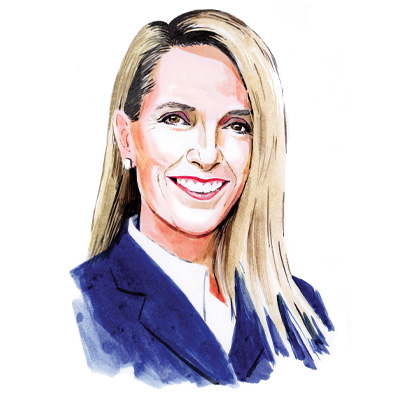










Bible colleges and seminaries are living through a season of accelerated change. Amy Kardash and Frank Yamada capture that reality well in their reflections on both the strain and the creativity emerging across our field (“The State of Theological Education,” Spring 2026). There is real tension between exhaustion and imagination. Leaders are navigating regulatory complexity, financial uncertainty, leadership turnover, cultural fragmentation, and the disruptive emergence of artificial intelligence. At times, the tyranny of the urgent disrupts the space necessary for thoughtful innovation. Those who manage this tension well will be our most effective leaders. I especially resonate with Amy’s observation about the growing spirit of collaboration. Some of the most encouraging developments I am seeing are partnerships that would have been unlikely even a decade ago: shared programs, creative delivery models, and institutions learning from one another rather than competing in isolation. That collegiality is not accidental; it is becoming essential for long-term sustainability and mission effectiveness. Frank’s framing of creativity emerging from chaos also feels particularly apt for this moment. Many institutions are being pressed to rethink long-held assumptions while remaining deeply rooted in mission. In that sense, disruption is not only a challenge but also an invitation to discern anew what faithful biblical and theological education must become. As AI reshapes education and ministry, our institutions are uniquely positioned to articulate what cannot be automated: wisdom, character, spiritual discernment, and the formation of whole persons for faithful service.
Philip Dearborn
President, Association for Biblical Higher Education
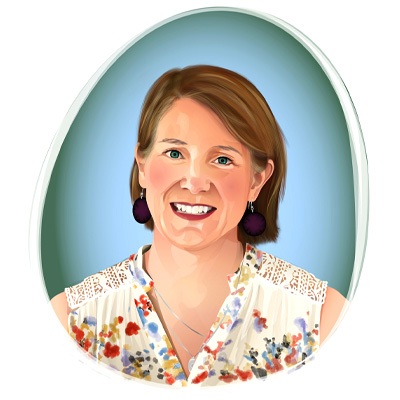
I work with classroom technology and instruct Library tutorials for students in writing and research. “How to Hatch a Story” (Spring 2026) resonates with me, specifically the section on clarity. Because I am a visual learner, I typically venture toward training and teaching in a visual way. When I teach – online or in a classroom – I tell a story, sharing relevant scenarios to help students form a picture. I would not throw out different links and passwords and expect a student to use them without a step-by-step story that they can grasp. A story guides the visual, which gives the students something to remember. Each semester, I survey students to assess the services and resources they receive through Hood Library, allowing them to submit their responses anonymously; the confidential stories they share help me to strengthen our resources and confirm those that bring them the most success. I am grateful and delighted to read warm responses of sincere gratitude in the surveys. Seeing the students succeed tells a clearer story of the fidelity of Hood Theological Seminary. The journey that students take to graduation is an achievement that leads to purpose; we can thank the faculty and staff of Hood for assisting with those, and for living out Hood’s mission: to prepare women and men for bold and creative leadership for the Christian church for a diverse world. Each effort to walk this mission comes with a story to share.
Patricia Marie Commander
Library Director/Writing Center Coordinator, Hood Theological Seminary
In Trust magazine welcomes your letters! Please email them to editors@intrust.org.