









In this era of livestreamed worship services, church podcasts, and short-form digital content, it’s worth remembering that these media practices didn’t burst onto the scene ex nihilo during the great remote-ization of churches in 2020. While the pandemic intensified the use of digital technologies, they are simply the latest innovations in a millennia-long effort to communicate the Good News.
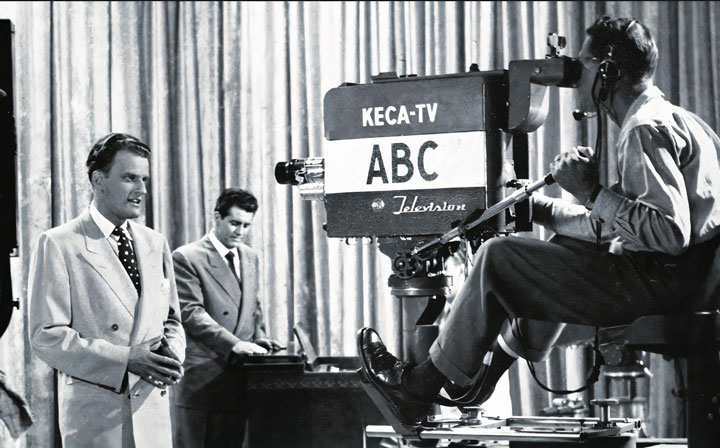
Seventy-five years ago the world experienced an even greater watershed moment in evangelism tech. The Rev. Billy Graham adapted his successful radio show, the Hour of Decision, for Sunday night television. The first episode was broadcast coast-to-coast on Sept. 30, 1951, on ABC.
Its three-year run set the stage for future broadcasts, starting with Graham’s 1957 Madison Square Garden Crusade. “Radio, books, and films have all had an important part in extending our ministry, but by far the most significant in the long term has been television,” Graham wrote in his 1997 autobiography, Just as I Am.
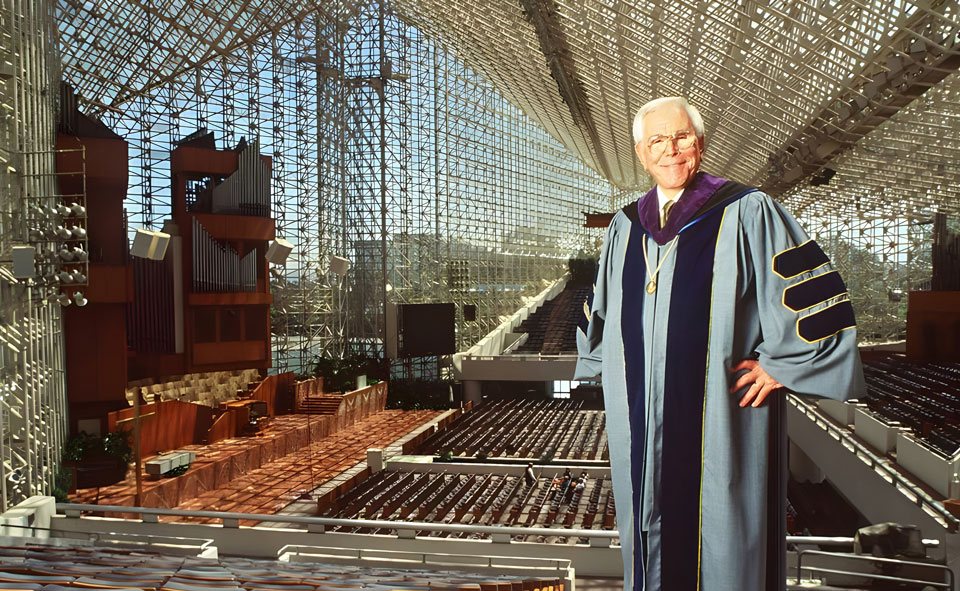
Graham’s venture into TV inspired others, including the Rev. Robert Schuller, who, at the time of Graham’s first TV broadcast, was a 25-year-old pastor of a Chicago congregation of the Reformed Church in America. Four years later, he moved to Orange County, California, to start a new church. The area’s low-vacancy rate forced him to innovate: He rented a drive-in movie theater on Sunday mornings and preached from the snack bar roof to people in their cars.
“His goal was to inspire people,” said Gerardo Martí, the William R. Kenan, Jr. Professor of Sociology at Davidson College and co-author, with Mark T. Mulder, of two books about Schuller and the Crystal Cathedral. “He recognized that society was changing fast, and people needed a new form of resilience. He believed that we needed to do that through faith in God.”
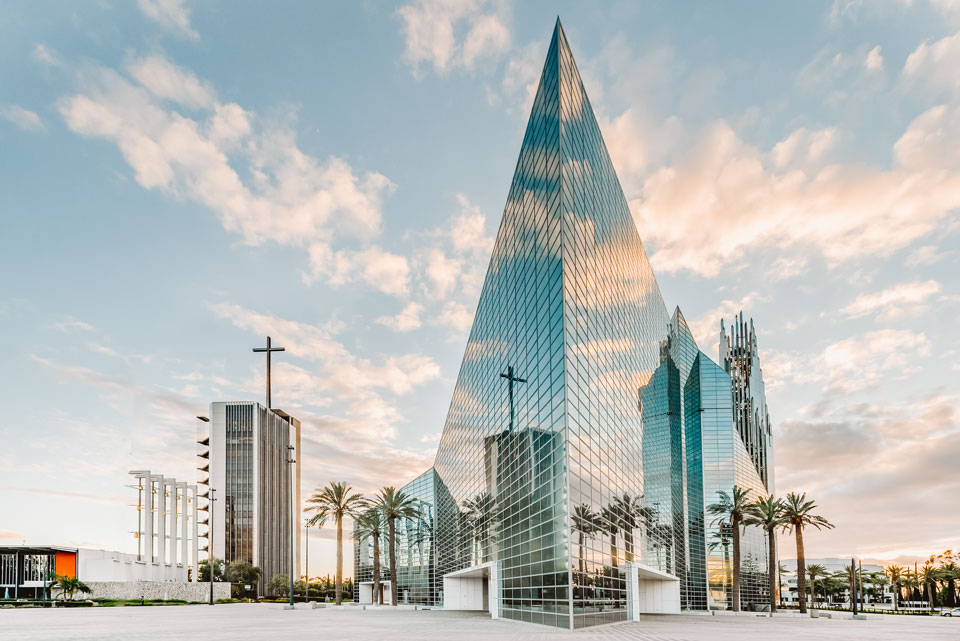
That message proved irresistible to Southern California suburbanites in the mid-20th century. Schuller set his sights on a wider audience, and on Feb. 1, 1970, KTLA aired the first episode of his weekly church program, Hour of Power, a nod to Graham’s show. His ministry grew so much that he commissioned a new sanctuary. Renowned architect Philip Johnson designed the Crystal Cathedral, a massive marvel that opened in 1980 and served as both church and Hour of Power studio. The New York Times, in its 2015 obituary for Schuller, reported that the show drew more than 7.5 million weekly American viewers in the mid-1980s and added twice that number after it began appearing in dozens of other countries.
As a new breed of “televangelists” populated the airwaves, the word became associated with charlatans, superficiality, and scandal. None of these applied to Schuller, who received his M.Div. degree from Western Theological Seminary. But that didn’t much matter. “Not many people admire Schuller,” Martí said. After extensive research, however, he thinks Schuller deserves another look. Even if today’s pastors don’t like his style, Martí said, they are indebted to him, especially in terms of church management.
He innovated fundraising and outreach techniques. He influenced thousands of pastors, and mentored megachurch leaders like Bill Hybels of Willow Creek Community Church in the United States, as well as David Yonggi Cho of Yoido Full Gospel Church in South Korea.
Some criticize Schuller for the ambition that motivated him to build his televised ministry, but Martí says it was less pride and more the desire to share the gospel. Indeed, Schuller, who was born 100 years ago, began thinking in the 1950s that people who were unable to attend church because of disability or illness – or any reason – should be able to worship from their car or, later, their living rooms.