









For generations, one measure of a theological school’s academic strength was visible on its shelves.
Graduate theological libraries accumulated hundreds of thousands, sometimes more than a million, volumes to support biblical scholarship, historical research, doctoral programs, and the work of faculty and students. Those collections were built for an era in which ownership was central to scholarship. But theological education has changed.
Some seminaries have reduced or eliminated Ph.D. programs. Students increasingly study online or in hybrid programs. Libraries participate in consortia and shared digital collections. Institutions facing persistent financial pressures are scrutinizing buildings, staffing, and collections that were created for a different educational model.
The question for boards, presidents, and academic leaders, then, is no longer simply: “How big should the library be?” A better question may be: “What does the institution need its library to do?” And AI is making the answer considerably more complicated.
At the very moment some institutions may be tempted to view libraries and librarians as less essential because of readily available digital information, AI is making their expertise potentially more important.
“The library is on every syllabus and no one’s agenda,” said John Kutsko, executive director of atla. That, he argues, needs to change.
From owners to stewards
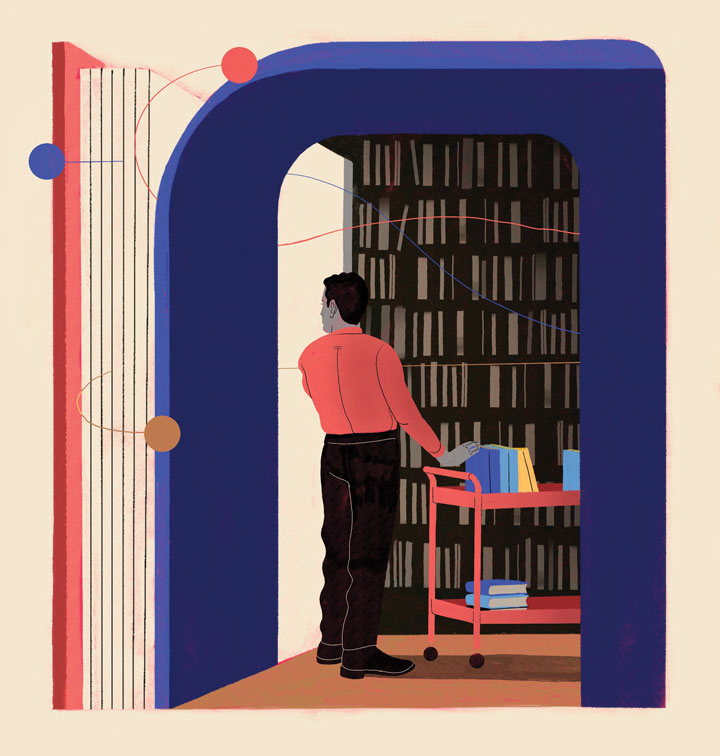
The size of theological collections remains impressive, but size alone indicates less about a library’s ability to serve students than it once did.
Pitts Theology Library at Emory University reports more than 600,000 volumes, while Union Theological Seminary’s Burke Library, for example, reports more than 700,000 items. The Burke Library illustrates an even older model of cooperation: Its member schools pooled resources decades ago to build a common theological collection.
“Collaboration around digital resources isn’t a frontier; it’s already the norm,” Kutsko said. The choice among digitizing materials, using databases, and retaining physical materials, he added, is both “a strategic one” and “a missional one.”
That distinction matters. The emerging question is not whether print is good and digital is bad, or vice versa. It is whether every institution needs to own every commonly used resource when technology and consortial arrangements can provide broader access at a lower cost.
But Kutsko draws a sharp line around another category of materials: Those that only an institution physically possesses.
Theological libraries often hold unique special collections that may exist nowhere else. “Distinctiveness is cheap to hold and expensive to lose,” Kutsko said.
That becomes particularly urgent as theological schools merge, relocate, or close.
“When a seminary closes,” Kutsko said, “the endowment has a trustee. The archive has nobody.”
For boards, preservation therefore is not simply a library issue. It is a matter of institutional stewardship and risk.

AI changes the equation
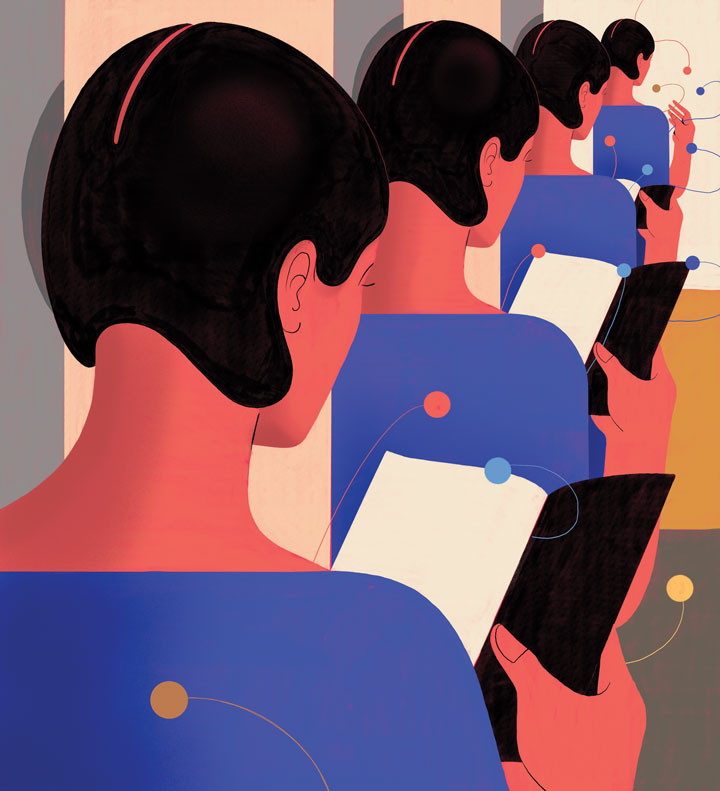
If digitization changes how libraries provide information, AI changes how people determine whether information can be trusted.
Generative AI can locate information, summarize arguments, and produce sophisticated prose almost instantaneously. It can also fabricate citations, obscure the provenance of information, and present false claims with extraordinary confidence.
John Dyer, vice president for enrollment services and distance education at Dallas Theological Seminary, sees considerable promise in AI as a research tool.
AI can be highly effective at “identifying sources and finding things,” he said. But he draws a distinction between accelerating research and accelerating learning.
“I think it’s the learning part that is probably the opposite of strong,” Dyer said. Students focused on completing assignments can use AI to finish them faster, “but the problem is that the assignment is never the goal.”
Dyer, a longtime software developer and author who has studied how digital technologies shape their users, argues that tools do more than help people accomplish tasks; using them also forms the user. If a student already possesses foundational skills, AI may accelerate work productively. If not, using AI to bypass the work can bypass the formation the assignment was intended to produce.
“There’s no real shortcut to formation,” Dyer said. That is where the traditional expertise of librarians takes on new significance.
Elonda Clay, MLIS, M.Div., ThM., a theological librarian at Gammon Theological Seminary and founder of AI for Seminaries, says AI is changing library work in substantive ways. Instruction now must teach students to recognize fabricated citations, misinformation, disinformation, and synthetic content, as well as evaluate AI output. Kutsko puts the distinction another way: Students may be more tech-savvy, but they are not necessarily more text-savvy. AI complicates that distinction because what appears to users as authoritative text may actually be a technologically generated synthesis with unclear sources.
“Not only are they relying on a summary and not the source,” Kutsko said, “but they don’t even know what the source is.”
For Kutsko, that makes information literacy one of the most durable skills theological education can provide.

The rise of the AI Librarian
As AI reshapes research, teaching, and information literacy, secular higher education is already responding. The surprising part of that trend is what is not happening. These institutions are not replacing librarians with AI. They are hiring librarians because AI exists.
Libraries have a particular responsibility in the AI era because they provide access to trusted resources and help students and faculty distinguish credible, verifiable information from unreliable or artificially generated content.
Elonda Clay, a librarian at Gammon Theological Seminary, cautions that theological schools should not automatically conclude that every library needs a newly titled AI specialist. For many small seminaries, the more pressing issue is capacity. She argues that restoring support for increasingly isolated professional librarians may be more important than adding an AI title to an already overburdened operation. The question is whether AI work represents a genuinely new position or simply another responsibility assigned to a shrinking staff. Whatever the title, she sees AI literacy as increasingly inseparable from librarianship.
And Kutsko goes further: “I do think the theological library should become the campus AI literacy hub.”
That could mean helping students verify citations, teaching faculty how to evaluate AI-generated material, advising institutions about copyright and licensing, examining privacy concerns, contributing to academic-integrity policies, and helping leaders evaluate AI vendors. Kutsko argues that this is not an entirely new mission. It is an extension of what professionally trained librarians have long done.
“The theological librarian of the future will be teaching faculty,” he said. The question will be the same one librarians have long taught students to ask: “How do we evaluate sources?”
What Does ATS Actually Require?
For boards evaluating library budgets, one misconception is especially important to correct: Accreditation does not require a theological school to maintain a collection of a particular size.
The Association of Theological Schools’ current standards take a principles-based approach. Standard 6 focuses on whether library and information services support the school’s educational mission. Standards 6.3 through 6.6 address sufficient and appropriately qualified personnel, integration of library personnel into institutional leadership and planning, regular evaluation of resources and services, and collaboration with faculty. Accreditation emphasizes access, expertise, integration, and effectiveness.
Clay notes that the standards were adopted in 2020, before generative AI’s public emergence, but she considers their principles “AI-ready.” The standards describe a professional librarian working within institutional relationships: leadership, faculty, budgeting, strategic planning, assessment, and instruction.
That may make Standard 6.4 particularly important for boards. It calls for library and information services personnel to be appropriately integrated into leadership, faculty, and decision-making structures. As Clay points out, librarians can curate collections, teach students, and evaluate resources but cannot give themselves a place in governance.
Kutsko recommends giving the library an explicit mandate for campus AI literacy, ensuring the library director participates in leadership discussions and AI policy development, investing in professional development and giving librarians meaningful policy authority.
Q’s we should ask
For trustees, the future of the library is increasingly a matter of institutional strategy. Boards should consider whether library resources, services, and expertise support the school’s mission, thereby reflecting how students learn and conduct research today.
That means finding the right balance between physical and digital collections, preserving distinctive
archives and rare materials, and using consortia and shared resources to expand access. Library spaces should also reflect current educational models.
AI adds urgency to these decisions. Libraries can help students and faculty evaluate sources, verify citations, maintain research integrity, and navigate the ethical use of emerging technologies.
Ultimately, boards should focus less on how much a library owns and more on whether the institution is investing wisely in access, preservation, and professional expertise.
Rather than asking whether AI will replace libraries, leaders may need to ask a different question: “What kind of library will best serve theological education in the decade ahead?”
The answer may depend on whether the library equips students and faculty to distinguish reliable scholarship from algorithmic invention, preserves the theological traditions entrusted to the institution, and helps the school navigate a rapidly changing information landscape.
In that sense, the library of the AI era may be less about housing knowledge than about helping communities discern what knowledge — and wisdom — they can trust.

Stewardship beyond the shelves
For theological schools, the stakes extend beyond ordinary academic research.
Theological libraries preserve the memory of churches and traditions: denominational histories, rare texts, sermons, correspondence, missionary collections, institutional records, and artifacts that tell the story of communities of faith.
At the same time, seminaries are preparing ministers who will preach, teach, and counsel people in an information environment increasingly shaped by AI.
Those graduates will encounter polished answers generated without transparent sourcing. They will serve congregations trying to distinguish fact from misinformation. They may use AI to prepare sermons, study Scripture, or answer pastoral questions. Information literacy, therefore, becomes not simply an academic competency but a formational one.
Clay calls attention to what she describes as epistemic risk. The authority with which graduates preach, teach, and offer pastoral counsel rests partly on their ability to verify sources, evaluate AI-generated claims, and trace information back to its origins.
If schools reduce their capacity to teach those skills, congregations ultimately bear the consequences when unreliable information is presented confidently.
Dyer approaches the same problem from the standpoint of formation. Technology can accelerate an existing skill, he says, but it cannot substitute for the work required to acquire the skill in the first place.
Kutsko reaches an even more theological conclusion. “AI can answer a question,” he said. “It can’t form the person asking it.”
Theological education exists to form people who will, in turn, help form others, he said. “You can’t outsource formation. AI can’t do formation.”