









MAGAZINE
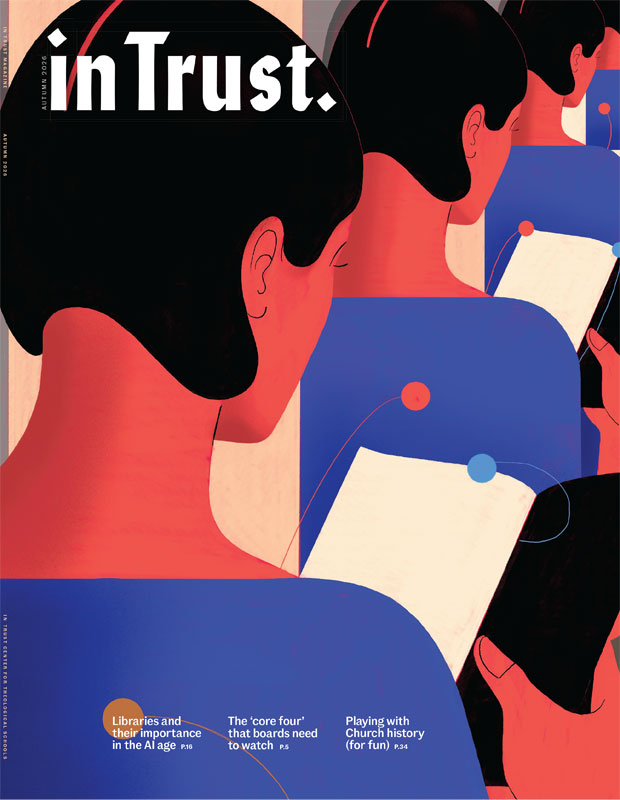
How to be human in the age of AI

Artificial Intelligence is rapidly reshaping higher education, ministry, and daily life. But perhaps the most important question isn’t what AI can do; it’s what it means to be human in a world where machines can increasingly think, write, and create.
Matt Hufman explores how to be human in an AI age by featuring the work of the University of Notre Dame’s Virtues & Vocations initiative. Rather than focusing on the latest technology, the article invites theological educators to consider enduring Christian virtues that distinguish human life from artificial intelligence.
The framework centers on three essential characteristics of humanity: our capacity for wisdom; our embodied existence in relationship and community; and our calling to love. These are not simply theological concepts; they are practical guideposts for preparing students to navigate a future in which AI will be a constant companion in ministry and leadership.
As seminaries and theological schools wrestle with how to integrate AI into classrooms and institutional life, this feature offers a thoughtful reminder that technological advancement should never eclipse the formation of faithful, wise, and compassionate leaders. Read “How to Be Human in an Age of AI” here.What do you think? Email us here with your thoughts.
Also, in the Summer 2026 issue of In Trust:
- Congregational Recalibration. Are congregations finally finding their footing after the pandemic? New research from the Hartford Institute for Religion Research suggests that while most churches have not returned to pre-pandemic norms, many have reached a new equilibrium marked by resilience and adaptation. This feature examines what these findings mean for theological schools as they prepare leaders for congregations that are evolving rather than returning to the past. Read Congregational Recalibration here.
- Mission Accomplished. What’s in a name? Sometimes, everything. Baptist Bible College’s transformation into Mission University was the result of more than a decade of strategic planning, stakeholder engagement, and careful discernment. The article examines how a thoughtfully executed rebrand can strengthen an institution’s identity, expand its reach, and honor its heritage while positioning it for the future. It’s an insightful case study for theological school leaders considering how mission and identity work together in a changing educational landscape. Read Mission Accomplished here.
Did you get your magazine? If you’ve moved or don’t receive In Trust magazine (a magazine subscription comes with your membership to the In Trust Center for Theological Schools), you can update your information or ask to be placed on the magazine list by emailing us.
Full issue: You can read the Summer 2026 issue of the magazine on the website here.
PODCAST
Ep. 110: Seeing the mountains: Preparing theological education for the future
Adaptive leadership can help theological institutions navigate profound change while remaining grounded in their essential identity and mission.
Leadership expert the Rev. Tod Bolsinger, Ph.D., explores how adaptive leadership can help theological institutions navigate profound change while remaining grounded in their essential identity and mission. In a recent episode of the Good Governance Podcast, Bolsinger argues that today’s leaders need more than ready-made solutions; they must be willing to acknowledge what they do not know, experiment, learn, and distinguish between what is truly essential and what is simply familiar. For governing boards, Bolsinger says this work begins with clarifying what an institution must preserve, what must change, and what may need to be left behind. Describing discernment as “the spiritual practice of governance,” he offers a hopeful challenge: Institutions may not be able to control the changing landscape, but they can develop the capacity to adapt and move forward faithfully. Listen to Ep. 110: Seeing the mountains: Preparing theological education for the future here.
Other recent episodes include:

- Making hard choices through faithful governance. How does a board unanimously decide to leave a campus that has been its home for more than a century? In this Good Governance Podcast, Luther Seminary President Robin Steinke shares how mission, data, and shared governance helped leaders navigate that difficult decision. Facing changing student needs, evolving educational models, and nearly $40 million in deferred maintenance, the seminary chose to invest in its mission and future rather than buildings that no longer served its needs. The takeaway for leaders? Build trust, acknowledge the reality, and keep mission at the center, because, as Steinke says, “We can do hard things together.” Listen to Ep. 108: Making Hard Choices Through Faithful Governance here.
- Creating a different future. Higher education strategist Rick Staisloff, senior partner, rpk GROUP, explores how strategic partnerships and shared services can strengthen mission, not signal failure. Listeners will gain practical guidance on evaluating business models, identifying the right partners, and pursuing long-term transformation before crisis forces change. This episode offers valuable insights for leaders seeking to guide theological schools with clarity, courage, and a renewed focus on mission. Listen to Ep. 107: Creating a different future here.
- Rethinking board governance in theological education. Drawing on the most extensive governance study of ATS-accredited schools to date, In Trust Center President Amy Kardash and Governance Initiative Project Director David Rowe examine how leadership stability, clear board roles, and intentional board development contribute to institutional effectiveness. They challenge boards to think more deeply about mission stewardship, presidential support, and the evolving realities facing theological education today. Listen to Ep. 106: Rethinking board governance in theological education here.
GRANT OPPORTUNITY
Board Development Grants
Board Development Grants offer financial support of up to $10,000 USD for action-oriented board development opportunities and growth by providing a catalyst to propel your governing or advisory board forward in its strategic priorities. Applications for the next cycle will be accepted from now until September 30, 2026, by 4 p.m. ET. To learn more about grant details, eligible projects, and the application process, view this informational video and visit the Board Development Grant webpage. If you have any questions, contact boardgrants@intrust.org.
WEBINAR
The Thinkers: Reimagining the Board’s Role in Strategic Planning
October 13, 1 p.m. ET
Zoom Facilitator: Rebekah Burch Basinger, Ed.D.
Project Director, In Trust Center’s Wise Stewards initiative
For board members accustomed to doing, the idea that their most important contribution to institutional planning is strategic thinking, not plan development, can be difficult to embrace. Yet it may be the most consequential leadership gift they offer. While the responsibility for shaping and detailing a strategic plan rests primarily with the president and campus leadership, the board’s strategic thinking establishes the parameters within which that work unfolds, from initial framing through implementation. This webinar invites boards into a fresh reimagining of their role, discovering that as the thinkers, they offer a distinctive and essential contribution to institutional life.
VIDEO SERIES
Practicing Collaboration Video Series
In this 10-part recorded series, leaders within theological education share practical insights drawn from their lived experiences of collaboration. Each conversation explores a different dimension of “practicing collaboration,” offering valuable lessons, fresh perspectives, and actionable ideas for those seeking to strengthen collaborative leadership and ministry.
- Video 5: Expanding Vocational Paths for Undergraduate Students. Dr. Jeff Carter, president of Bethany Theological Seminary, describes the Brethren Higher Education Consortium and offers insight into how collaboration can begin to replace competition among institutions. He shares how the project came together, what challenge it seeks to address, and the opportunities it creates for participating schools. Along the way, the conversation highlights what is working well and lessons learned throughout the process. Watch Expanding Vocational Paths for Undergraduate Students here.
- Video 6: A Collaborative Vision for Nazarene Theological Education. Dr. Jeren Rowell, president of Nazarene Theological Seminary, and Dr. Brent Peterson, dean of the College of Theology and Christian Ministries of Northwest Nazarene University, speak with Dr. Greg Henson about an ambitious collaboration taking root within the Church of the Nazarene. Through a network of Nazarene universities, the collaborative initiative is focused on strengthening and reimagining graduate theological education. They share about the catalyst for the project, challenges they’ve encountered, and what they are learning in the process, including the importance of relationships. Watch A Collaborative Vision for Nazarene Theological Education here.
OF INTEREST
Sign up for The Congregations Project: Stories of Hope Across the United States
The Congregations Project is a monthly newsletter roundup sharing true stories of faith, resilience and innovation in congregational life. Each issue includes a mix of stories produced by congregations or about congregations, offered in a variety of formats: short films, reflective essays, and case studies tailored for busy faith leaders and curious Christians alike. Learn more about the project here.
SPONSORED
Introducing the ACEO Health Plan
AdminWise Shared Services is pleased to introduce the Association of Church Educational Organizations (ACEO) Health Plan, an exclusive health insurance option for ATS seminaries and church-related colleges. This sustainable, cost-effective solution helps institutions address rising employee health insurance costs while continuing to offer competitive benefits. Participants benefit from greater flexibility, reduced regulatory burden, subsidies, enhanced bargaining power, and shared governance to ensure institutional needs are met. Learn more at www.adminwise.org or contact ron.ringenberg@adminwise.org | 574-370-0345.