









MAGAZINE
The State of Theological Education

Theological education is navigating a period of rapid and profound change, shaped by leadership turnover, shifting federal regulations, financial pressures, and the rise of artificial intelligence. While these challenges are significant, leaders across the field also point to growing creativity, collaboration, and signs of renewal.
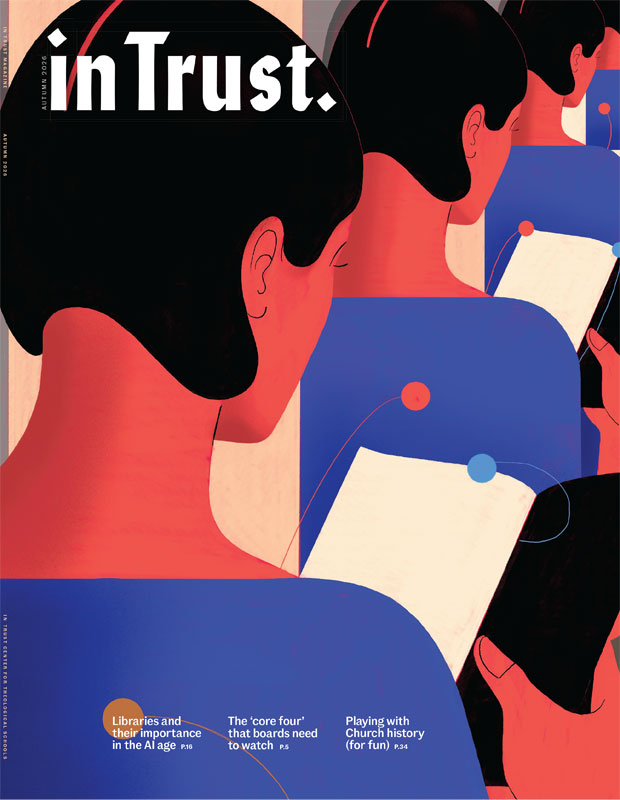
A featured article in the Spring 2026 issue of In Trust magazine highlights insights from a recent Good GovernancePodcast conversation with ATS Executive Director Frank Yamada and In Trust Center President Amy Kardash. Together, they paint a picture of theological education at a pivotal moment of facing real strain yet actively adapting. The article underscores how major investments through Lilly Endowment’s Pathways for Tomorrow initiative are driving innovation, while new partnerships and evolving educational models are opening fresh possibilities across the field.
Despite uncertainty, there are encouraging indicators: enrollment gains, increased collaboration, and a shared willingness to experiment and learn together.
Listen to the podcast here.
Read the article in the Spring issue of In Trust magazine here.
What do you think? Email us here with your thoughts.
Also, in the Spring 2026 issue of In Trust:
- The New Conventional Wisdom. New findings from the In Trust Center’s Governance Initiative challenge the long-held belief that a board’s primary role is to “hire and fire” a president, suggesting instead a more strategic focus on “hire and keep.” The study highlights the importance of securing and supporting effective leadership, noting a strong link between frequent presidential turnover and weakened institutional effectiveness and financial stability. Drawing on extensive data from schools across the U.S. and Canada, the research underscores the need for boards to nurture leaders, ensure thoughtful transitions, and strengthen governance practices. The findings will inform new resources to help institutions better align board effectiveness with mission fulfillment and long-term vitality. Read “The New Conventional Wisdom” here.
- Can innovation be a way of being? In conversation with Kairos University President Greg Henson, Winebrenner Theological Seminary President Brent Sleasman emphasizes that sustainable innovation emerges when organizations break down silos, share information broadly, and empower people to act in alignment with a common purpose. This approach has led to tangible outcomes at Winebrenner, including lower costs, increased enrollment, and more collaborative governance. Central to the model is a shift from top-down control to “permission-giving” leadership, where clarity of mission enables action across the institution. Ultimately, the conversation frames innovation as a long-term, formative process, one that shapes not just what institutions do, but who they are becoming in service to the church. View the video here. Read the article in In Trust magazine here.
Did you get your magazine? If you’ve moved or don’t receive In Trust magazine (a magazine subscription comes with your membership to the In Trust Center for Theological Schools), you can update your information or ask to be placed on the magazine list by emailing us.
Full issue: You can read the Spring 2026 issue of the magazine on the website here.
GRANT OPPORTUNITIES
Resource Grants: Deadline to Apply: April 30
The In Trust Center’s Resource Grant cycle opened in March 2026, and the deadline for applications is April 30. These matching grants of up to $15,000 help member schools engage external expertise to address strategic challenges and pursue innovative opportunities. Specifically, they target supporting projects that strengthen a school’s mission, encourage new thinking, and invest in adaptive change, from strategic planning and enrollment initiatives to curricular innovation and new educational models. All current member schools are eligible, except those that received a Resource Grant in 2025. Grantees complete a mid-year update and a final report. Full details are available here.
PODCAST
Leading through deep change in a shifting landscape
Theological education is under increasing pressure, but the deeper challenge may lie beyond enrollment and financial concerns.
In this episode, Aaron Einfeld, Ph.D., explores how institutions can misinterpret current realities by relying on outdated assumptions about formation. While demand for rigorous theological training remains strong, traditional models are often inaccessible in today’s context. Einfeld highlights the difficulty of organizational change and encourages schools to rethink their role, not just as degree providers, but as lifelong partners in developing ministry leaders. As churches seek more contextually grounded leadership, a gap is emerging between what seminaries offer and what ministry requires. Though the path forward will involve difficult change, including revisiting institutional identity, renewal is possible for schools willing to reimagine their purpose. Listen to Ep. 103: Leading Through Deep Change in a Shifting Landscape here.
Other recent episodes include:
- An Inflection Point for theological Education and an Opportunity to Lead: As federal policies continue to reshape higher education, leaders of theological schools are facing new challenges and new opportunities. In this timely conversation, governance expert David Rowe and higher education law scholar Peter Lake explore what shifting regulations, funding pressures, and cultural debates mean for boards and presidents today. From mission and accountability to accreditation and public trust, this discussion offers practical guidance for leading with clarity and resilience. Discover how institutions can move beyond compliance to strengthen strategy, communicate their value, and stay grounded in their mission in uncertain times. Listen to Ep.102: An Inflection Point for Theological Education and an Opportunity to Lead here.
- What decades of governance still have to teach us. To understand new governance trends, look to enduring wisdom. Governance expert Rebekah Basinger, Ed.D., reflects on what theological schools can learn from lasting board leadership principles, even amid financial, regulatory, and post-COVID pressures. She cites challenges like executive turnover and fatigued boards, while offering a hopeful vision of governance rooted in fiduciary responsibility, strong relationships, and shared stewardship of mission. Listen to Ep. 100: What decades of governance still have to teach us here.
SPONSORED
Introducing the ACEO Health Plan
AdminWise Shared Services is pleased to introduce the Association of Church Educational Organizations (ACEO) Health Plan, an exclusive health insurance option for ATS seminaries and church-related colleges. This sustainable, cost-effective solution helps institutions address rising employee health insurance costs while continuing to offer competitive benefits. Participants benefit from greater flexibility, reduced regulatory burden, subsidies, enhanced bargaining power, and shared governance to ensure institutional needs are met. Learn more at www.adminwise.org or contact ron.ringenberg@adminwise.org | 574-370-0345.