










Theological education is in a season of profound flux. Institutions are facing rapid regulatory change, persistent leadership turnover, financial strain, and the accelerating presence of artificial intelligence – all while trying to discern what faithful, sustainable mission looks like in a changing world.
If the traditional pace of change in theological education once unfolded over decades, leaders now find themselves navigating generational-level disruption over the course of just a few years. However, disruption and flux are not the full story.
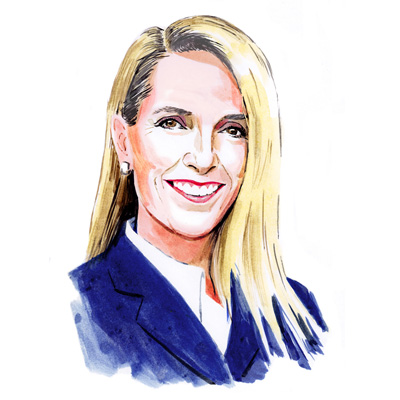
In a recent Good Governance podcast episode, Frank Yamada, the executive director of the Association of Theological Schools (ATS), and Amy Kardash, president of the In Trust Center for Theological Schools, describe a field marked not only by uncertainty, but also by creativity, collaboration, and signs of hope. Massive new investments through Lilly Endowment Inc.’s Pathways for Tomorrow Initiative are helping schools experiment with new educational models, partnerships, and road maps for creative ministry formation.
ATS enrollment data points to encouraging gains across much of the field. At the same time, boards and executive leaders are being pressed to respond more quickly, think more strategically, and support institutional change more intentionally than ever before in history.
The picture that emerges is not one of simple decline or easy optimism. It is a portrait of theological education at a turning point: stressed, adaptive, and still deeply generative. Across denominations and institutions, schools are learning from one another in new ways, sharing ideas, experimenting with fresh approaches, and building partnerships that would have been far less common a generation ago.
That spirit of collaboration is becoming a defining feature of the field, as leaders recognize that the challenges they face – financial sustainability, leadership development, technological change, and evolving ministry contexts – are rarely solved by a single institution alone. What follows are major themes from the Kardash and Yamada conversation about the state of theological education. You can find Episode 101 online at: intrust.org.

1) Creativity From Chaos
In the midst of the pandemic, Yamada, a scholar of the Hebrew Bible, pointed to the creation story in the book of Genesis and observed that creativity can come out of chaos. He offers that as an analogy for the current state of theological education.
“With this ongoing churn of both creativity and chaos, one wonders: What day are we actually in?” Yamada asked, referring to the days of creation in Genesis. “Are we on day six? Is there going to be a Sabbath? Is there going to be a day of rest? Because this churn has been churning.”
Yamada mentioned the Pathways for Tomorrow Initiative funded by Lilly Endowment Inc., which was expanded last year, resulting in over $700 million invested in ATS-accredited schools. He said 62% of schools in ATS membership had received grants.
But both he and Kardash noted that it has been a year of extremes in which, Kardash said, “the highs have been super high in creativity, and the chaos has been deeply felt.”
“There has been this extreme related to the regulatory climate, this season of anxiety and stress on top of other stressors that we already know exist in the field and throughout higher education,” she said. “And then there’s been this other extreme of hope and promise related to a lot of new Pathways funding and opportunity, also in what schools have been doing creatively.”
She said the creativity had been in part around collaboration, such as non-traditional and ecumenical partnerships; shared services and shared faculties; and then “a lot of opportunity for new programming – non-degree programming, lifelong learning, competency-based, and contextual.”
Kardash said that there are significant places in which schools are collaborating and finding creative ways to move forward. She pointed to a conference earlier this year in which there was a sense of “collegiality among unlikely partners” and has found, beyond the Pathways for Tomorrow Initiative, other places where schools are finding ways to learn together. “I think that is timed wonderfully given all the challenges we had in isolation,” she said.
The scale of the experimentation through the initiative is striking. Schools are rethinking not only how they deliver education but also whom they serve and how ministry formation happens across a lifetime. A major part of the work involves efforts toward sustainability.
“There is substance behind this creativity,” Yamada said, “and you can see all of that in these projects.”
2) Federal Churn Issues
In the past year, schools have faced increasing changes in federal policy on higher education. Yamada noted the drumbeat of changes coming from Washington, D.C., that will affect the entire field.
“There have been multiple executive orders, some even directed toward accrediting agencies, multiple guidance letters from the ‘Dear Colleague letters’ and the passing of the ‘One Big, Beautiful Bill,’ with this anti-DEI emphasis, and the downsizing and shifting of the functions of the Department of Education,” he said.
He said if there is one piece of advice that presidents of schools need to hear, it’s this: “Compliance is not an option if you are Title IV (federal student aid) receiving school.”
Yamada said that ATS standards require that schools comply with federal laws. That can create tension given that laws are, in some cases, still being implemented and challenged in courts around the country.
At the same time, he said that the law is the law, so schools should make sure that they “do whatever they can to get their legal experts looking at their programs and their admissions and all of their institutional data and reports to make sure that they’re in compliance.”
Kardash said the regulatory climate has created a “season of anxiety and stress on top of other stressors that we already know that exist in the field and throughout higher ed.” One of the challenges with this, she said, is the speed at which this has happened, particularly considering that schools are typically slow to change by nature.
“The current climate,” she said, “is actually requiring a responsiveness and a nimbleness and a speed of change that we’re uncomfortable with or we’re not accustomed to.”
She said boards need to be involved in considering their fiduciary responsibility to understand the issues and engage in the right ways.
Federal mandates have continued, she added, making it feel like just keeping up with regulatory issues is a full-time job.

3) Stop the Turnover
Leadership turnover continues to reshape theological education, placing pressure not only on institutions but also on the people called to guide them. Data from ATS suggests the pace of change has not slowed.
From 2017 to 2022, ATS recorded 406 transitions among presidents and chief academic officers. The trend continued through the pandemic and beyond.
“In 2023 and 2024, we continued to see over a hundred transitions in those two roles,” Yamada said. “The total by the end of 2024 was 605 transitions.”
The numbers point to strain on roles that were already demanding.
“It does point to the stressors that are on these two positions,” Yamada said, noting that leaders have been navigating institutional issues on many fronts – academic models, finances, collaborations, and property decisions – and frequently doing so simultaneously.
The speed of change has compounded the challenge. “This is really rapid change and this is really profound change,” he said. “So it’s both deep and fast.”
Kardash said the churn reflects not only external pressures but also insufficient institutional support. She described conversations revealing “a lack of care of executive leaders” at a time when expectations are intensifying. “There are so many stressors and expectations for executive leaders that to do more – and to do it faster – in a challenging environment with financial pressures and obstacles is a very difficult task,” she said.
Kardash emphasized that boards play a critical role in stabilizing leadership. Effective support, she argued, includes careful searches, intentional transitions, and ongoing accompaniment.
“How we’re preparing them and how we’re supporting them in that season of leadership can determine whether leaders succeed or quickly move on.”
4) The Board is Ready for its Spotlight
Amid regulatory upheaval, leadership turnover, and shifting educational models, governing boards are being pushed from the background into a more visible and demanding role. Leaders say the current moment requires boards to not simply approve decisions but to engage more actively in institutional direction.
Kardash believes many boards have not yet adjusted to that reality. “There’s a place for the board, and I’m not sure that boards are stepping up in this moment in the right ways,” she said, pointing to fiduciary responsibility and risk mitigation as central concerns in an unsettled climate.
Those responsibilities extend beyond compliance. Boards must also remain attentive to mission and opportunity. “Are they thinking about what mission fulfillment looks like now and in the future, and are they allocating the appropriate resources necessary to support that?” she asked.
Part of the challenge is structural. Boards meet infrequently and for limited periods, which can make sustained engagement difficult. According to data gathered through a recent study, governing boards often convene only a few times each year, raising questions about whether sufficient time is devoted to the most pressing issues.
Leadership relationships also matter. Kardash emphasized the importance of the connection between the board chair and the president, warning that dysfunction at the top can destabilize the institution. “If there isn’t harmony in that relationship … it’s far easier for the board to put another board chair into leadership than it is for the institution to have to call a new leader,” she said.
Yamada also warned that the consequences of instability extend beyond individual campuses to the future leadership pool itself. As turnover accelerates, fewer experienced candidates remain available to step into senior roles. That reality places even greater responsibility on boards to cultivate, sustain, and retain effective leaders once they are in place.

5) Signs of Hope
For all the anxiety surrounding theological education, leaders point to encouraging developments that suggest resilience – and even renewal – across the field.
One of the clearest indicators comes from enrollment data. After years of decline, more schools are now growing than shrinking. Yamada described the shift as “a very promising trend,” noting that it reverses a pattern that had persisted for roughly 15 years.
Growth appears widespread, crossing denominational lines and program types. Even the Master of Divinity degree, long seen as vulnerable, showed modest gains. “For the first time since 2006, ATS total enrollments will have exceeded 80,000 students,” he said.
Financial investment also has provided momentum. Pathways for Tomorrow funding is allowing schools to experiment with new approaches while strengthening existing programs.
At the same time, smaller grants are helping institutions pursue targeted improvements.
Beyond numbers and funding, leaders point to something less tangible but equally significant: a growing spirit of cooperation.
Kardash has witnessed that shift firsthand. At one recent gathering, she observed a striking openness among participants. There was, she said, a sense of “sharing and learning from one another, not to replicate or to model, but to extract things that are working.”
In a difficult cultural moment, that willingness to learn together may be the most hopeful sign of all.

6) Human Formation and AI
Artificial intelligence has moved from a theoretical concern to a daily reality, forcing theological schools to confront both practical and philosophical questions. Leaders say the challenge is not simply how to use the technology, but how to preserve the human dimensions of education and ministry.
Kardash sees the conversation expanding beyond fears of plagiarism or automation toward deeper issues of identity and purpose. Schools, Kardash said, are asking “what is truly unique about theological education and our focus on humanity, our focus on our faith, that we can bring into these conversations around artificial intelligence?”
That emphasis on human formation may position theological institutions to contribute something distinctive to broader societal debates. “What is it about human formation that we not only can lead with, but that we also can bring into other spaces where AI is being discussed and where important decisions are being made?” she asked.
At the same time, disparities in knowledge and engagement are emerging. Some institutions are experimenting aggressively, while others feel overwhelmed. Kardash worries about widening gaps between those groups, describing “the AI have and have-nots” as a growing concern.
“If you feel behind enough in something, you start to feel uncomfortable and you don’t want to raise your hand and ask,” she said. “And so that gap widens.”
Yamada emphasized that the technology is evolving faster than institutions can fully process. “AI is developing so quickly,” he said, noting that conversation frameworks are struggling to keep pace with innovation.
Still, he believes theological reflection must accompany technical experimentation. Schools are uniquely equipped to wrestle with questions about meaning, agency, and responsibility. Yet reflection alone is insufficient. Citing a colleague’s insight, he said engagement must be practical as well as theoretical. “We have to do it in the doing,” he said – using the technology while simultaneously assessing its implications.
Underlying these discussions is a fundamental question: What does it mean to be human in an age of AI?
For theological education, the answer may lie in its historic mission. While technologies can generate information, schools remain committed to shaping character, vocation, faith, and community – dimensions of formation that cannot be automated.
Leaders express cautious optimism that collaboration across institutions will help navigate the transition. Rather than confronting AI in isolation, theological schools and other institutions are convening conversations, sharing experiments, and building common frameworks.
In that sense, the emergence of AI may be less a threat than a catalyst – pushing theological schools to articulate more clearly the human values at the core of their work.