









Evensong:
Notes from the Choir
Timothy E. Popple
Quires and Places, 2025
Cathedral choirs have a rich tradition within Anglicanism. Non-Anglicans might best know these robed-and-ruffed choirs for their musical work at royal weddings, funerals, and coronations, or maybe the Lessons & Carols service – but that’s just scratching the surface. In Evensong: Notes from the Choir (Quires and Places, 2025) Timothy E. Popple, a passionate advocate of sacred choral music and the choirs that sing it, takes readers on a tour of this vast (and, he admits, vastly weird) world and introduces them to the joys, rewards, and quirks of choir life.
Popple started his choir career as an eight-year-old chorister at Durham Cathedral and now, decades later, is an alto lay clerk at Bristol Cathedral. Along the way he learned professional skills (punctuality, teamwork, leadership, self-reliance, resilience, bladder control, sermon survival), in-jokes, and the fascinating history of cathedral choirs. He shares these, as well as his insights into scripture, music, and church seasons.
The book’s namesake, Evensong – the sung, not spoken, Evening Prayer service in the Book of Common Prayer – is, according to Popple, “the most authentic way you can witness, taste, and feel cathedral life.” It’s also growing in popularity; more people are starting to attend Evensong services.
Whether readers know a canticle from an anthem, Popple encourages them to find an Evensong service nearby and just go. Evensong, he writes, “is not for a faithful few, or for other people. It is for you. Cathedral choirs are not an exclusive club for a privileged few. They are for you.”
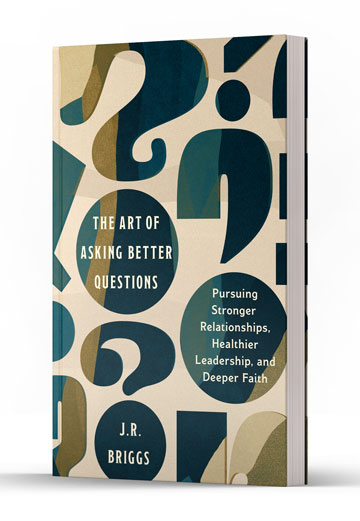
The Art of Asking Better Questions:
Pursuing Stronger Relationships, Healthier Leadership, and Deeper Faith
J.R. Briggs
IVP, 2025
Knowing what questions to ask is the key to unlocking surprising insights, important information, workable solutions, and meaningful relationships. Good questions have the power to connect us more deeply to our friends, colleagues, communities, and to ourselves and God. As J.R. Briggs writes in his new book The Art of Asking Better Questions: Pursuing Stronger Relationships, Healthier Leadership, and Deeper Faith (IVP, 2025): “Asking better questions can change your life and the lives of those around you.”
With laser focus, Briggs considers why and how everyone can improve their question-asking skills. He examines why people don’t ask questions: Maybe we think we already know the answer, don’t want to look stupid or disrespectful, or don’t want to shake up a conversation or delay a plan already in motion. In response he explains four types of questions (for information, interaction, understanding, and transformation) and how to avoid “cringeworthy” situations caused by intrusive or poorly timed questions.
“Good questions are gifts we extend to others,” Briggs writes. Asking them requires curiosity, wisdom, humility, and courage.
Part II of the book addresses how questions can shape our faith and how faith can shape our questions; Briggs finds 325 instances of Jesus asking questions, and includes more details in one of the valuable and shareable back-of-the-book resources.