












The In Trust Center provides support to our members and affiliates by offering timely responses to their needs. We serve more than 7,500 individuals, who participate in the governance and leadership of theological schools in the United States and Canada, along with the 230+ educational institutions from which these leaders come.
We welcome the opportunity to be in conversation with you so that we might walk alongside and support you as you fulfill your mission.
The In Trust Center Core Focus Areas

Learning
Communities

Resource
Consulting

Publications & Communications

Grant
Coordination
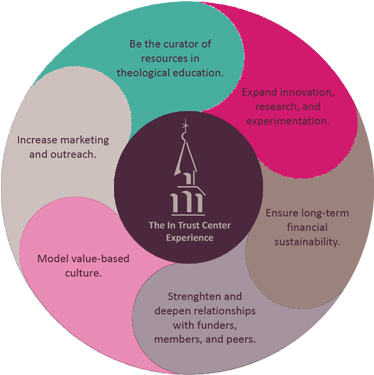
The In Trust Center Experience
We are committed to six strategic objectives, along with their defined priorities to support the “core” strategic intent outlined in the In Trust Center Strategic Plan.
The In Trust Center Strategy Assurance
We fulfill our mission and drive toward our vision.
We honor promises to our founders.
We address the current/future needs of theological schools, and prepare for known and potential challenges.
We execute our strategic objectives, monitor progress, and adapt as needed.
We use wise and innovative practices, which are representative of a learning community.
We commit to being fiscally responsible to ensure financial sustainability.